
Friday, May 16, 2014

Tuesday, May 13, 2014


Monday, May 12, 2014
APOD 4.8
Wednesday, May 7, 2014
Zooniverse: The Milky Way Project
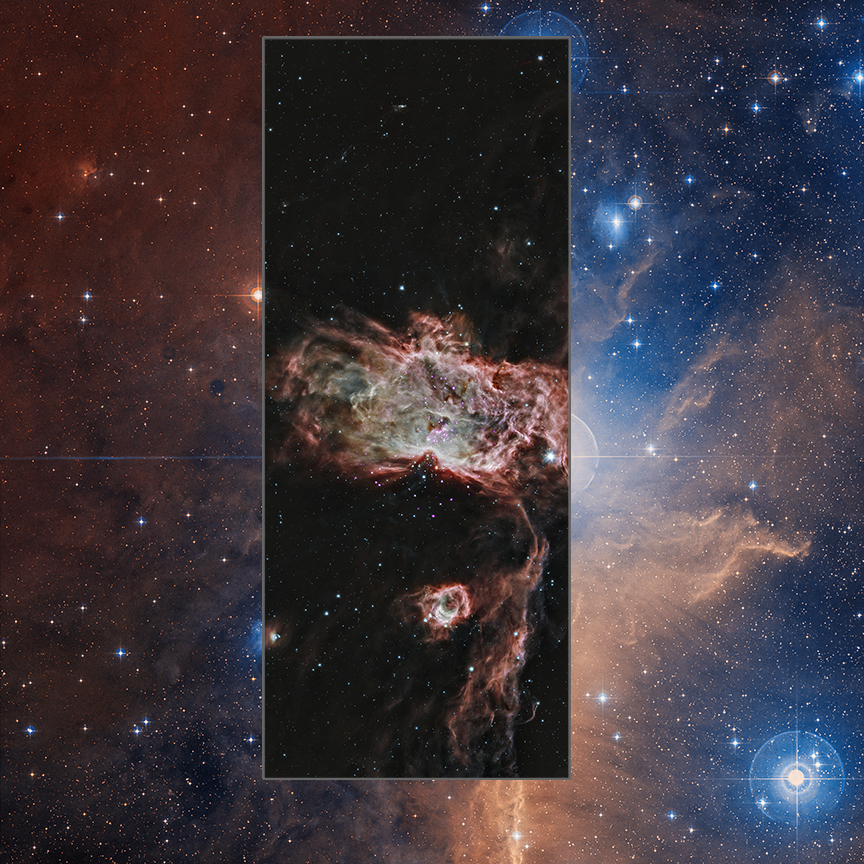
Today on Zooniverse I tried a new project at themilkywayproject.org. Basically, I drew circles in pictures of the sky around objects that appeared to be Star Clusters, Galaxies and EGO's.

APOD 4.7

Monday, May 5, 2014
Jocelyn Bell Burnell
Susan Jocelyn Bell was born in Belfast, Northern Ireland. Her family was Quakers, and as they believed in the education of women she was sent to a Quaker boarding school. She moved from her boarding school to Glasgow University, continuing her pursuit of the sciences. She graduated from Glasgow in 1965 and moved to Cambridge to pursue her PhD. While at Cambridge, she worked with Anthony Hewish to build a new kind of radio telescope. The telescope was designed to find quasars, but it was through this telescope that Bell actually discovered pulsars. A pulsar is a rapidly rotating neutron star that produces a beam of electromagnetic radiation. After obtaining her PhD in 1968, she married Martin Burnell. They had a son named Gavin, born in 1973. Following her time at Cambridge, Bell moved to the University of Southhampton and became a professor. She was later employed at the Royal Observatory at Edinburgh , the Open University and the University of Bath. Between 2002 and 2004 she was the President of the Royal Astronomical Society. She is currently a visiting professor at Oxford University, and was elected the President of the Institute of Physics in 2008. She is passionate about women in the field of science and her Quaker faith.
Thursday, May 1, 2014
APOD 4.6
Wednesday, April 30, 2014

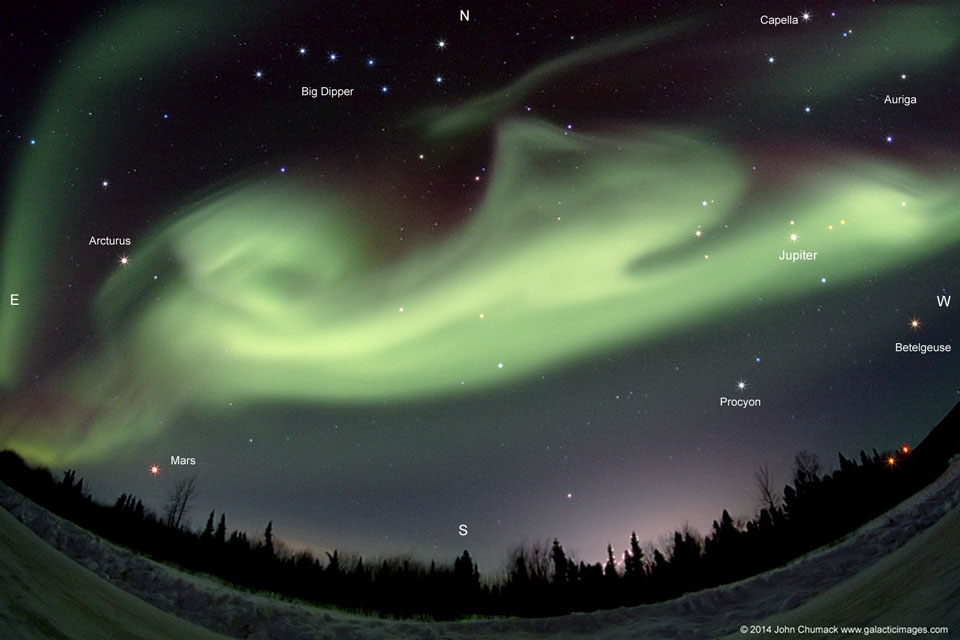
Observations
Date: 4/26/14
Location: PV Service Road
Time: 9:00 PM- 10:00 PM
Identified the ecliptic
Planets: Jupiter (in Gemini), Mars (14 arc seconds), Saturn
Constellations: Orion, Gemini, Leo, Leo Minor, Virgo, Canis Major, Canis Minor, Carina, Coma Bernices, Corvus
Telescope (small): Castor's Double Star
Telescope (large): M104 (Sombrero Galaxy), Gamma Leonis, M58 (Virgo)
Location: PV Service Road
Time: 9:00 PM- 10:00 PM
Identified the ecliptic
Planets: Jupiter (in Gemini), Mars (14 arc seconds), Saturn
Constellations: Orion, Gemini, Leo, Leo Minor, Virgo, Canis Major, Canis Minor, Carina, Coma Bernices, Corvus
Telescope (small): Castor's Double Star
Telescope (large): M104 (Sombrero Galaxy), Gamma Leonis, M58 (Virgo)
Citizen Science
So far I have looked for planets near stars and classified galaxies. To find planets, you have to examine how the brightness of stars changes over time. You are presented with a graph of the star's brightness and any drastic variations of the brightness indicate a planet nearby. I did this on planethunters.org.
For the galaxy classification, galaxyzoo.org presents you with images of various galaxies and you are asked to identify the shape, the roundness and any features such as spiral arms, rings, merging of galaxies, dust lanes or irregular shapes.
For the galaxy classification, galaxyzoo.org presents you with images of various galaxies and you are asked to identify the shape, the roundness and any features such as spiral arms, rings, merging of galaxies, dust lanes or irregular shapes.
Jocelyn Bell Burnell Sources
"Susan Jocelyn Bell Burnell." 2014. The Biography.com website. Apr 30 2014http://www.biography.com/people/jocelyn-bell-burnell-9206018.
"Jocelyn Bell Burnell." Jocelyn Bell Burnell. N.p., n.d. Web. 30 Apr. 2014.
http://www.srcf.ucam.org/~srw38/walks/tour/atoz/scientistdatabase.php?ppleid=4
http://www.biography.com/people/jocelyn-bell-burnell-9206018#synopsis&awesm=~oCVIMZCPeFzQbk
Friday, April 25, 2014
APOD 4.4
APOD 4.1
APOD 4.5
Friday, April 11, 2014
APOD 4.3
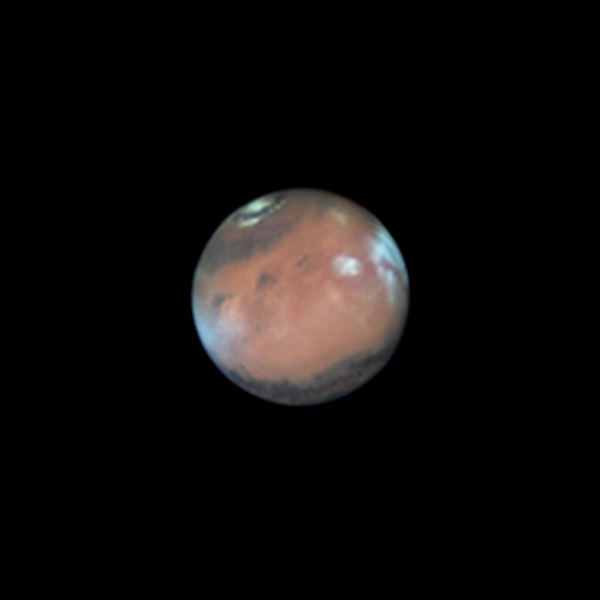
Pictured above is Mars near opposition. This occurs between April 8 and 14. The planet is opposite the sun near this time, which makes it the brightest to us on Earth and through telescopes. The exact dates of closest approach and opposition are different because orbits are elliptical, not circular. Mr. Percival is really excited about this. That's why I chose this picture.
Tuesday, April 8, 2014
Contributions to the Nature and Structure of the Milky Way
Galileo -Determined that various stars were also at various distances from the Earth. This disproved the theory that the Universe was similar to a glass bowl. The stars are sporadically placed, and not evenly. Galileo proved this observationally.
Harlow Shapley - estimated the size of the Milky Way using RR Lyrids. Also found the Sun's position. Partook in the Great Debate and proposed that the Milky Way was the entire universe with other spiral galaxies contained inside.
Edwin Hubble -observed Cepheid variable stars and calculated their distance using the research done by Henrietta Leavitt. He concluded that they were too far away from the Earth to be in the Milky Way. He classified galaxies and thought that there was some level of progression between types, for example, that ellipticals eventually became spirals.
Immanuel Kant-published "The Universal Natural History and Theory of the Heavens" which included two theories. The first is the "Nebular Hypothesis" which covers star and planet formation, and theorizes that it happens when gas and dust clouds spin and collapse due to gravity, forming larger, denser objects (planets,etc). His second theory distinguished nebulae from galaxies, and suggested that galaxies other than the Milky Way were in existence.
Henrietta Leavitt-confirmed in 1912 that the variable stars of greater intrinsic luminostiy (Cepheid Variables) had longer periods. This became known as the "Period-Luminosity relationship" which became a vital tool used to measure distances in the universe. Her research allowed Edwin Hubble to find Cepheids in other galaxies, which radically altered our view of the universe in it's entirety.
Heber Curtis- is famous for his role in "The Great Debate" with Harlow Shapley. He argued that spiral nebulae were actually spiral galaxies outside of our own.
Friday, April 4, 2014
APOD 4.2
Friday, March 21, 2014
APOD 3.9 (makeup for 3.7)

Friday, March 7, 2014
APOD 3.8

Wednesday, March 5, 2014
3rd Quarter Biography: Dorothea Klumpke Roberts
Dorothea Klumpke Roberts was born the third daughter of a wealthy German family in San Francisco, California. Her parents believed the American education system was lacking, and so they educated their children overseas in France, Germany and Switzerland. All of her siblings were successful in various fields such as music, medicine and business. Dorothea obtained a Bachelor of Science degree from the University of Paris in 1886. She first worked with pioneer astrophotographers Paul and Prosper Henry. Her job was to measure star positions and plot them on the astrographs. She also studied meteorites. In 1886, Sir David Gill proposed international cooperation in creating an atlas of all of the stars. The first of many conventions to complete this project was held in Paris, and Dorothea found a niche translating all of the papers into French for the official records. In 1889 she became the first recipient of an award called the Prix de Dames from the Astronomical Society of France. In 1893 she was made an officer of the Paris Academy of the Sciences. Both of the aforementioned were the first for a woman. In 1891, despite being both a woman and a foreigner, Dorothea obtained the position of director of the Bureau of Measurements at the Paris Observatory. She beat out 50 men for this position. The project was immense. It is estimated that a stack of all of Paris's charts of the sky would stand over 37 meters high! Dorothea remained the Director until 1901 when she married. She also achieved her Doctorate in Sciences in 1896, fifty years before Harvard would grant a Doctorate degree to a woman. In 1899, Dorothea was selected by the French to be carried in a balloon to observe to Leonid meteor shower. She was the first woman to observe the Meteor shower from above the Earth. Of the experience, Dorothea wrote: "My body seemed lighter than ever, I had the sensation of floating in air, and my heart was filled with gratitude". After Dorothea's marriage, she joined her husband in his quest of mapping all 52 of the Hershel areas. After her husband's unexpected death in 1906, Dorothea was left to continue the project with advanced astronomical equipment and a large sum of money. It is without question that Dorothea paved the way for many successful women in the field in science. Rock on, Dorothea.
Sources:
"Leonid MAC - Dorothea Klumke and the 1899 Leonids." Leonid MAC - Dorothea Klumke and the 1899 Leonids. N.p., n.d. Web. 03 Mar. 2014.
"Dorothea Klumpke Roberts, Pioneer Woman Astronomer." AANC Article: Dorothea Klumpke Roberts. N.p., n.d. Web. 05 Mar. 2014.
"1942PASP...54..217A Page 217." 1942PASP...54..217A Page 217. N.p., n.d. Web. 05 Mar. 2014.
(http://adsabs.harvard.edu/full/1942PASP...54..217A)
Sources:
"Leonid MAC - Dorothea Klumke and the 1899 Leonids." Leonid MAC - Dorothea Klumke and the 1899 Leonids. N.p., n.d. Web. 03 Mar. 2014.
"Dorothea Klumpke Roberts, Pioneer Woman Astronomer." AANC Article: Dorothea Klumpke Roberts. N.p., n.d. Web. 05 Mar. 2014.
"1942PASP...54..217A Page 217." 1942PASP...54..217A Page 217. N.p., n.d. Web. 05 Mar. 2014.
(http://adsabs.harvard.edu/full/1942PASP...54..217A)
Friday, February 21, 2014
APOD 3.6

Thursday, February 20, 2014
Sources: Dorothea Klumpke Roberts
"Leonid MAC - Dorothea Klumke and the 1899 Leonids." Leonid MAC - Dorothea Klumke and the 1899 Leonids. N.p., n.d. Web. 20 Feb. 2014.
"Dorothea Klumpke Roberts, Pioneer Woman Astronomer." AANC Article: Dorothea Klumpke Roberts. N.p., n.d. Web. 20 Feb. 2014.
"Dorothea Klumpke Roberts, Pioneer Woman Astronomer." AANC Article: Dorothea Klumpke Roberts. N.p., n.d. Web. 20 Feb. 2014.
Friday, February 14, 2014
APOD 3.5

Monday, February 10, 2014
APOD 3.4

Pictured above is the barred spiral galaxy NGC 5105 and NGC 5078. They are separated by about .5 degrees, or the apparent width of the full moon. Both are found within the constellation Hydra, and are only an estimated 90 million lightyears away. They are both similar in size to our own Milky Way Galaxy. The prominent stars within the foreground lie within our own galaxy as well. I chose this photo because it is an interesting illustration of the way we perceive size and brightness to indicate distance from the Earth.
APOD 3.3

Friday, January 24, 2014
APOD 3.2

This cluster, found in Perseus, contains starts much younger and hotter than the sun. You can see the Double Cluser with your naked eye, but it has to be very dark for you to do so. This picture, similar to my last APOD, illustrates the immensity and complexity of the universe, and is beautiful to look at. These things are what make Astronomy interesting in general for me, and I'm a visual learner, so looking at pictures helps me to contextualize things much better than hearing or reading about them.
Friday, January 17, 2014
APOD 3.1

Friday, January 10, 2014
Observations
Date: October 27, 2013
Time: 6-8p
Place: Siesta Key Beach
Sky Conditions: few clouds on the horizon, but mostly clear. Moon not present.
Instuments used: binoculars
Planets: Venus
Bright Stars Noted: Polaris, Antares, Vega, Deneb, Altair (summer triangle overhead), Fomalhaut
Constellations Noted: Cassiopeia, Picis Austrinus, Aquila, Cyngus, Lyra, Hercules, Sagittarius, Capricornus
Date: December 2, 2013
Time: 6:00 -8:00 PM
Place: Siesta Key Beach
Observed the sunset, Cygnus, Lyra and Aquila. The moon was barely a sliver, as tomorrow is the new moon. The app on my phone is hard to read, so finding planets other than Venus and Jupiter is difficult. Venus is near the moon, slighlty lower. Jupiter rose around 7pm. Gemini and Orion are also easy to find as they are more overhead now that it is winter.
Date: December 21,2013
Time: 7:00-9:00 PM
Place: Siesta Key Beach
7-9pm
Siesta Key Beach
Observed Sirius, and noticed it's changing colors due to it's being near the horizon. Upon further research, this is a fairly common phenomenon. Sirius is actually commonly reported as a UFO around December due to it's greenish color. Located Jupiter and Venus easily due to their brightness. The moon is a waning crescent which makes it easier to locate objects.
Time: 6-8p
Place: Siesta Key Beach
Sky Conditions: few clouds on the horizon, but mostly clear. Moon not present.
Instuments used: binoculars
Planets: Venus
Bright Stars Noted: Polaris, Antares, Vega, Deneb, Altair (summer triangle overhead), Fomalhaut
Constellations Noted: Cassiopeia, Picis Austrinus, Aquila, Cyngus, Lyra, Hercules, Sagittarius, Capricornus
Date: December 2, 2013
Time: 6:00 -8:00 PM
Place: Siesta Key Beach
Observed the sunset, Cygnus, Lyra and Aquila. The moon was barely a sliver, as tomorrow is the new moon. The app on my phone is hard to read, so finding planets other than Venus and Jupiter is difficult. Venus is near the moon, slighlty lower. Jupiter rose around 7pm. Gemini and Orion are also easy to find as they are more overhead now that it is winter.
Date: December 6, 2013
Time: 6:00 - 8:00 PM
Place: Siesta Key Beach
Sky Conditions: Sunset, new moon, clear skies
Instuments used: Phone application
Planets: Venus (viewed closely to the moon), Jupiter in the east
Bright Stars Noted: Gamma andromeda, Mira
Constellations Noted: Gemini, Orion (and belt), Cassiopeia, Pegasus, Andromeda, Cetus
Other: observed the stars that appeared as the sun set
Date: December 21,2013
Time: 7:00-9:00 PM
Place: Siesta Key Beach
7-9pm
Siesta Key Beach
Observed Sirius, and noticed it's changing colors due to it's being near the horizon. Upon further research, this is a fairly common phenomenon. Sirius is actually commonly reported as a UFO around December due to it's greenish color. Located Jupiter and Venus easily due to their brightness. The moon is a waning crescent which makes it easier to locate objects.
Thursday, January 9, 2014
Astronomer Bio Sources
"German Astronomers: Carl Friedrich Gauss, Johannes Kepler, Friedrich Bessel, Johann Bayer, August Ferdinand Möbius, William Herschel." Google Books. N.p., n.d. Web. 09 Jan. 2014.
"Friedrich Bessel." Friedrich Bessel. N.p., n.d. Web. 09 Jan. 2014.
"Friedrich Bessel." Friedrich Bessel. N.p., n.d. Web. 09 Jan. 2014.
"Friedrich Wilhelm Bessel." Bessel Biography. N.p., n.d. Web. 09 Jan. 2014.
Astronomer Bio: Friedrich Bessel
Friedrich Bessel was born in July, 1784 and died in March of 1846. He was a contemporary of Carl Gauss, also a mathematician and astronomer. He attended the Gymnasium in Minden for four years but found Latin difficult, and soon became an apprentince at an import-export concern in Kulenkamp. He was proficient in mathematics and soon became skilled in navigation, which peaked his interest in astronomy. Initially his interest served only to tell longitude using the stars, but eventually he made important contributions to astronomy as we know it today. He drew the attention of a prominent German figure of the time, Heinrich Olbers, by producing more accurate calculations of Halley's comet. Shortly following this, he left Kulenkamp for an observatory near Bremen, Germany where he worked under James Bradley to produce precise stellar observations for over 3000 stars. His work gained him some notoriety and at the age of 26 he was appointed the director of the Koningburg Observatory by Frederick William III of Prussia. He went on to win the Lalande Prize from the Institute of France for his published reflections on Bradley's observations. He calculated the positions of over 50,000 stars during his time at Koningburg.
His main claim to fame is that he was the first to use parallax to calculate the distance to a star, beating several notable astronomers with his delcaration that 61 Cygni had a parallax of .314 arcseconds. Bessel's measurements also allowed him to notice deviations in the motions of Sirius and Procyon, which he assumed must be caused by unseen "dark companions". His publishing of this theory lead to the discovery of Sirius B. He was later elected a fellow of the Royal Society, and the largest crater in the Moon's Mare Serenitatis was named after him. Bessel was one of the few astronomers to lack a university education and yet still gain notoreity and respect for his findings. He was awarded a degree by the University of Gottingen, on the reccomendation of Gauss, because without the title of doctor he could not become the director of the Observatory.
His main claim to fame is that he was the first to use parallax to calculate the distance to a star, beating several notable astronomers with his delcaration that 61 Cygni had a parallax of .314 arcseconds. Bessel's measurements also allowed him to notice deviations in the motions of Sirius and Procyon, which he assumed must be caused by unseen "dark companions". His publishing of this theory lead to the discovery of Sirius B. He was later elected a fellow of the Royal Society, and the largest crater in the Moon's Mare Serenitatis was named after him. Bessel was one of the few astronomers to lack a university education and yet still gain notoreity and respect for his findings. He was awarded a degree by the University of Gottingen, on the reccomendation of Gauss, because without the title of doctor he could not become the director of the Observatory.
APOD

APOD

APOD

The horsehead nebula is one of the most well known nebulas in the sky. The red center is visible to us from Earth because it is an extremely opaque dust cloud that lies in from of the bright red emission nebula. The emission's red color is due to the combination of electrons recombining with protons to form hydrogen atoms. I chose this photo because it's something that is possible to observe, and I have added it to the things I look for during my observations.
Subscribe to:
Posts (Atom)