
Friday, May 16, 2014

Tuesday, May 13, 2014


Monday, May 12, 2014
APOD 4.8
Wednesday, May 7, 2014
Zooniverse: The Milky Way Project
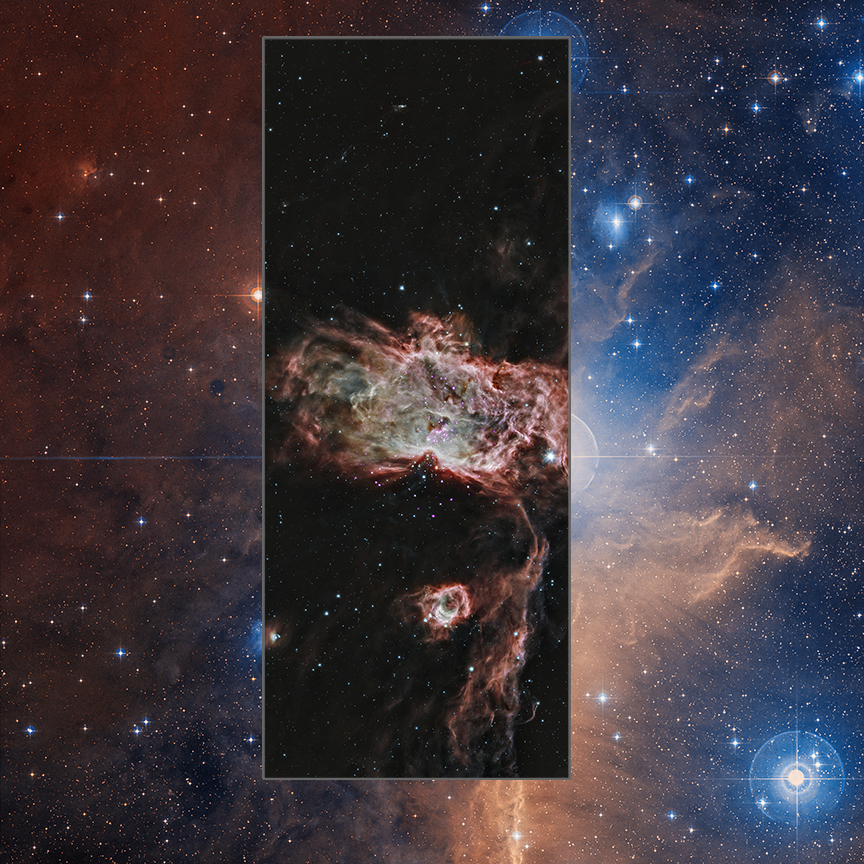
Today on Zooniverse I tried a new project at themilkywayproject.org. Basically, I drew circles in pictures of the sky around objects that appeared to be Star Clusters, Galaxies and EGO's.

APOD 4.7

Monday, May 5, 2014
Jocelyn Bell Burnell
Susan Jocelyn Bell was born in Belfast, Northern Ireland. Her family was Quakers, and as they believed in the education of women she was sent to a Quaker boarding school. She moved from her boarding school to Glasgow University, continuing her pursuit of the sciences. She graduated from Glasgow in 1965 and moved to Cambridge to pursue her PhD. While at Cambridge, she worked with Anthony Hewish to build a new kind of radio telescope. The telescope was designed to find quasars, but it was through this telescope that Bell actually discovered pulsars. A pulsar is a rapidly rotating neutron star that produces a beam of electromagnetic radiation. After obtaining her PhD in 1968, she married Martin Burnell. They had a son named Gavin, born in 1973. Following her time at Cambridge, Bell moved to the University of Southhampton and became a professor. She was later employed at the Royal Observatory at Edinburgh , the Open University and the University of Bath. Between 2002 and 2004 she was the President of the Royal Astronomical Society. She is currently a visiting professor at Oxford University, and was elected the President of the Institute of Physics in 2008. She is passionate about women in the field of science and her Quaker faith.
Thursday, May 1, 2014
APOD 4.6
Subscribe to:
Posts (Atom)